Nitron R1 vs R3 coilovers: what does three-way adjustment add?
Choose Nitron R1 if you want to adjust compression and rebound together. Choose R3 if you need independent rebound and separate low- and high-speed compression for repeatable testing. That extra control can help when tuning body movement under braking and response over sharp kerbs.

Choose Nitron R1 if you want to adjust compression and rebound together. Choose R3 if you need independent rebound and separate low- and high-speed compression for repeatable testing. That extra control can help when tuning body movement under braking and response over sharp kerbs.
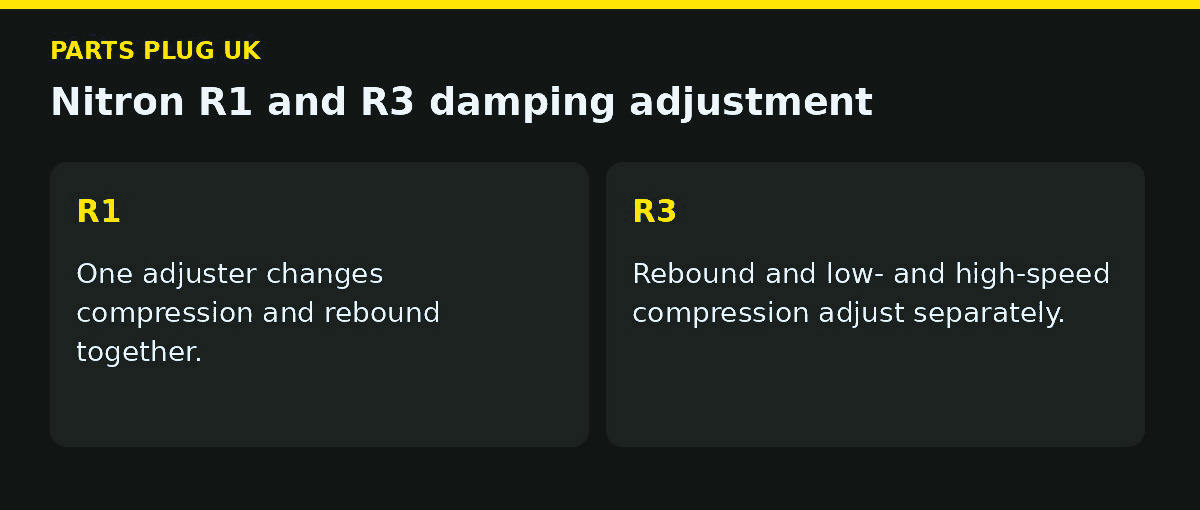
R1: one combined damping adjustment
One R1 adjuster changes damping characteristics in compression and rebound together. This makes for a practical adjustment when you want to try a change without having to track several independent settings. Choose the exact application and spring package first, then use the baseline settings supplied for the kit.
R3: separate rebound and two compression adjustments
R3 adds independent rebound, low-speed compression and high-speed compression adjustment. Here, speed means how quickly the damper shaft moves. Lower shaft speeds often come from body movement such as brake dive or roll. Higher shaft speeds can come from sharp bumps or kerbs. These effects overlap in use, so record changes and assess them on a consistent route or track session.
Decide how you will use the extra adjustment
If you want a straightforward setup whose damping you can change together, the R1 layout is simpler to work with. The R3 layout gives an installer or driver finer control when the car has a specific handling issue or is tested regularly. Ask about reservoir clearance on the exact application and plan how the adjusters will remain accessible after installation.
Which adjuster will you actually use?
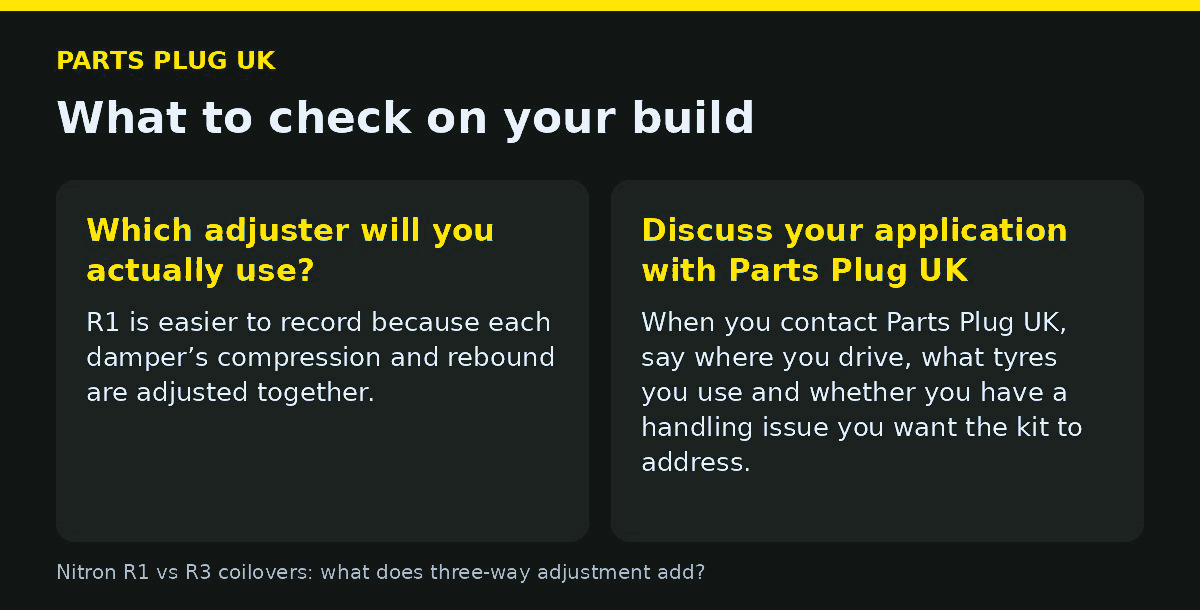
R1 is easier to record because each damper’s compression and rebound are adjusted together. If you identify a need to change one without the other, its adjustment is the limitation. R3 gives you that control plus separate compression adjustments, but you’ll get more from it if you can repeat a test and tell which change affected the car. Budget time for the baseline setup and, where relevant, space for reservoirs.
Discuss your application with Parts Plug UK
When you contact Parts Plug UK, say where you drive, what tyres you use and whether you have a handling issue you want the kit to address. That steers the choice better than the number of adjusters alone.
Before choosing R3, identify where its adjusters and any reservoirs would sit on the exact application. If your use is mainly road miles and you expect only a combined change between familiar settings, ask your specialist whether R1 covers the adjustments you actually expect to make.
For the parts covered in this guide, see Compare Nitron Suspension catalogue options at Parts Plug UK.