
R32 GT-R Catch Can Checklist: Breather Routing, Hose Size and Clearance
Plan an R32 GT-R catch-can installation around the fitted breather connections, hose and end fittings, and the space available with the bonnet closed. Mark the coolant overflow on a separate line in your sketch so you can check the two routes independently.

Plan an R32 GT-R catch-can installation around the fitted breather connections, hose and end fittings, and the space available with the bonnet closed. Mark the coolant overflow on a separate line in your sketch so you can check the two routes independently.
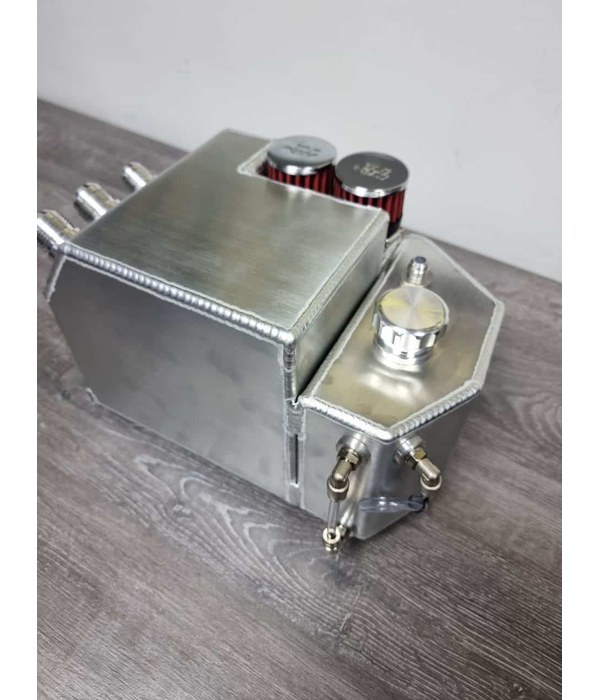
Start at the engine connections
Photograph the cam-cover breathers and identify the existing connections, including any changes made for a different turbo or intake layout. Ask the fitter to confirm the intended ventilation arrangement and which catch-can connections it uses. The IWS-PPUK-OCC listing specifies AN12 and AN10 inlets and an AN10 return. Which ports and fittings the car needs depends on the installation plan.
Trace the tighter bend on the actual car. A straight fitting needs space beyond the port; an angled fitting can change where the hose starts bending and how you reach it with a tool. Either can work if the route clears nearby parts and leaves enough space to service the can.

Measure the hose routes with fittings in mind
Confirm hose and fitting compatibility as a set, including the thread and sealing arrangement on each end. Work out how much room a straight or angled end needs and leave enough space around bends. Make room for engine movement and avoid routes that would rub or run close to excessive heat. A clear photo with a ruler next to the proposed hose path is often more helpful than an estimate taken from the outside of the bay.
Leave a route you can service later
Ask the fitter to point out how they’ll reach the caps and see the coolant level once all the hoses are in place. If you’d like Parts Plug UK to check the connections on IWS-PPUK-OCC, send the sketch with the port sizes marked and one wider photo of the bay.
At the tightest port, compare the space a straight end uses in front of the fitting with the room an angled end uses to the side. Include access for a tool and check that you can still reach the cap and see the coolant level once the hoses are in place.
For the parts covered in this guide, see Check the listed part and its options at Parts Plug UK.