
Syltech Fluid Temperature Sensors: Fitment and ECU Inputs
Choose a Syltech fluid temperature sensor by checking three things together: the port thread and seal, the available depth for the probe and the ECU input. On an oil filter housing with a spare port, use the drawing to see where the tip will sit in the fluid passage.

Choose a Syltech fluid temperature sensor by checking three things together: the port thread and seal, the available depth for the probe and the ECU input. On an oil filter housing with a spare port, use the drawing to see where the tip will sit in the fluid passage.
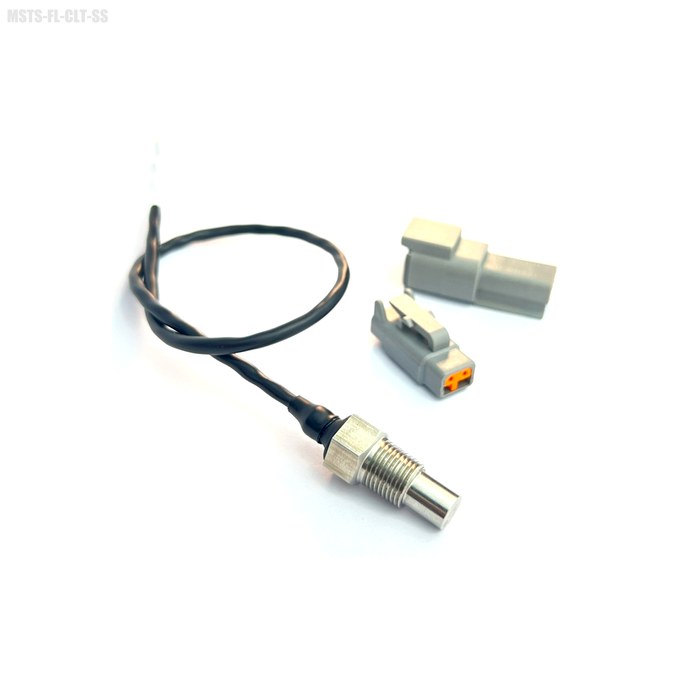
Read the drawing before choosing an adaptor
Confirm the diameter and pitch, the sealing arrangement and the space inside the port. Sensor threads can look similar, so use the drawing and the component reference rather than comparing by eye. Allow space for the connector outside the housing and check that the probe will sit in the intended fluid path without touching an obstruction.

Use the curve for the selected sensor
Syltech publishes sensor-specific data. Two sensors with a similar body and thread can have different temperature-to-resistance curves. Confirm the ECU input type, the intended signal and the correct pull-up and calibration before assembly. Share the sensor reference and the datasheet with the person configuring the ECU.
If you are choosing between an existing oil gallery port and a sensor in the sump, agree which reading will be useful in service. They can warm up at different rates and tell you different things about the engine.
Check the location for the job
An oil temperature reading from one location can differ from a reading elsewhere in the circuit. Agree with your builder what temperature needs monitoring and choose a port that makes sense for that measurement. Check the probe’s listed range against the expected operating conditions.
For help narrowing the range, send Parts Plug UK the fluid, port dimensions and ECU model together with the Syltech part number you are considering.
When comparing a direct-fit probe with one that needs an adaptor, check the tip position and the space outside the housing for each option. Choose on the installed dimensions so the connector remains accessible and the probe measures the fluid at the point you intended.
For the parts covered in this guide, see Compare Syltech catalogue options at Parts Plug UK.